“Why does it feel so good to cry while listening to the radio?”
If you have ever found yourself staring out the window of a UV Express on a rainy evening, thinking deeply while a December Avenue or Moira Dela Torre song plays in the background, you know exactly how this feels. For Filipinos, music is not just background noise. It is a way to express our deepest, hidden feelings—what we call hugot.
The word hugot literally means “to pull out.” In Filipino pop culture, it means drawing out deep feelings from our own painful experiences and sharing them through words, memes, or love songs. But here is the big question: why do Filipinos, who are known around the world for being happy and always smiling, love sad songs so much? Why do we choose to sing about heartbreak, losing love, and longing, instead of happy, upbeat songs?
In this article, we will look at the culture and stories behind the OPM (Original Pilipino Music) hugot phenomenon. From classic videoke hits to modern streaming tracks, let us find out why our hearts will always love songs about love, pain, and everything in between.
The Secret of the Hugot Song: Why It Hurts So Good
Not every sad song is a hugot song. OPM has a special style that goes straight to the Pinoy heart. If you look closely at a classic Pinoy love song, you will find three main things that make it so emotional:
1. Simple and Real Lyrics
Filipino hugot lyrics do not use difficult words or complicated language. They use simple, everyday words, but they cut deep. We do not need hard-to-understand messages to feel the pain. When Moira Dela Torre sings, “Saan nagsimulang magbago ang lahat?” (Where did everything begin to change?) or when Ben&Ben asks, “Hindi ba’t ikaw ang may sabing walang iwanan?” (Weren’t you the one who said no one gets left behind?), we understand it immediately. These are the exact questions we ask ourselves when we are alone at night. The simple honesty of these words makes us feel that the song is about our own lives.
2. The \“Birit\” Factor and Expressing Our Feelings
In Filipino culture, we like to show our feelings by singing loud and putting our whole heart into it. Because of this, most popular hugot songs have very emotional, high-pitched parts (the bridge and chorus). This is the part of the song where the singer hits the high notes, and you can feel the pain in their voice. Think of Aegis singing \“Halik\” or Regine Velasquez singing \“Dadalhin\”. Singing loud, or what we call birit, is a way to let out our heavy emotions. When we sing along loudly, we are letting go of our own sadness, worries, and struggles.
3. Melodies That Are Both Sweet and Sad
OPM songwriters know how to create tunes that make us feel nostalgic. They use musical notes that sound sweet but also a little sad. The music feels like a warm hug and a gentle pat on the back, telling us: \“It is okay to feel hurt; I am here with you.\” This is why even if we do not know anything about music theory, we feel sad as soon as the first guitar chord or piano note plays.
From Videoke to the Commute: Songs for Our Daily Lives
In the Philippines, hugot is a part of everyday life. We live it through two very important things: the videoke machine and our daily travel.
Videoke as Our Shared Therapy
In other countries, people only sing karaoke at parties or when they are drinking. But in the Philippines, videoke is like a therapy session for the whole neighborhood. You do not need to be a great singer to hold the microphone. All you need is the courage to sing your heart out.
When a neighbor rents a videoke machine for a birthday party (or even for no reason at all), you will always hear sad, painful songs. From Aegis’s \“Luha\” to Sponge Cola’s \“Pasensya Na\”, everyone sings together. Here, pain is not something you carry alone. It becomes something we share. When we see our friends and family singing about heartbreak, we feel comforted because we know we are not the only ones going through hard times. The videoke session becomes a safe place where we can show our soft side, laugh, and have a good time together.
The Commuter’s Quiet Place
For people working in Metro Manila, the travel back home can be more tiring than the actual job. After a long day of hard work, you have to face hours of heavy traffic. During these times, the UV Express van or the jeepney becomes a quiet place to rest.
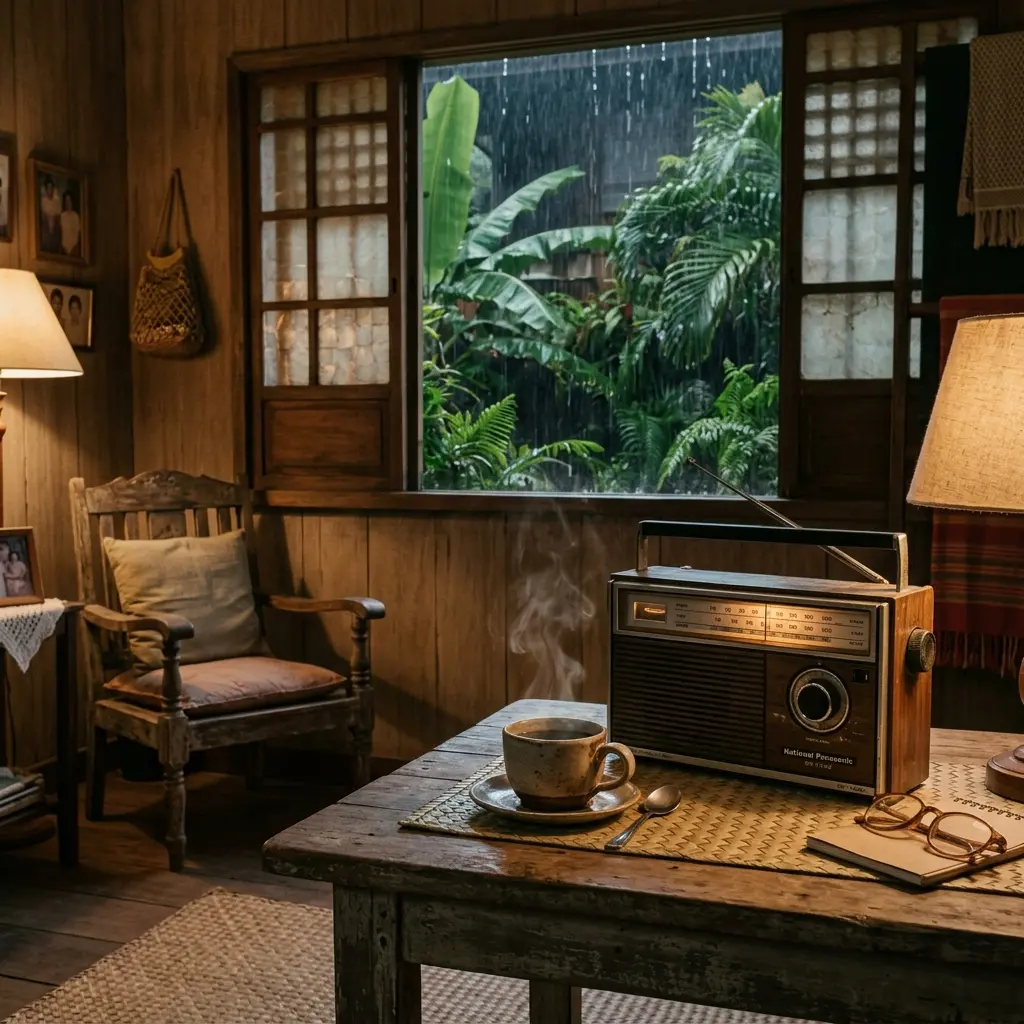
Whether you are wearing earphones or listening to the vehicle’s radio, sad love songs keep you company. You watch the streetlights pass by and the rain fall on the glass window. There is a special feeling when you combine being tired, sitting in traffic, and listening to sad music. It is the perfect time to think about \“what ifs\” and past memories. According to data from Pure Pinoy Radio, our listeners stay on our stream for an average of over 12 minutes per session. This means they are not just clicking and leaving; they are staying to listen to the music and find comfort during their long journeys. Online radio is like a quiet friend that stays with you through the trip.
How Hugot Songs Have Changed Over Time
Love and heartbreak never change, but the way we sing about them does. We can look at the history of OPM hugot in three different eras:
| Era | Famous Artists | Style and Characteristics | Famous Songs |
|---|---|---|---|
| The Golden Era of Ballads (70s-80s) | Rey Valera, Basil Valdez, Sharon Cuneta, Imelda Papin | Big violin sounds, dramatic singing, and deep Tagalog words focusing on fate and true love. | \“Maging Sino Ka Man\”, \“Isang Babalikan, Isang Iiwanan\” |
| The Band Boom & Rock Hugot (90s-2000s) | Eraserheads, Rivermaya, Aegis, Silent Sanctuary, Sugarfree | Rock band style, louder guitars, and high-energy singing that young people loved. | \“Ang Huling El Bimbo\”, \“Burnout\”, \“Pasensya Na\” |
| Modern Indie & Bedroom Pop (2010s-Present) | Ben&Ben, Moira Dela Torre, December Avenue, Adie, TJ Monterde | Soft acoustic guitars, gentle voices, and songs about self-love, mental health, and modern relationships. | \“Kathang Isip\”, \“Paubaya\”, \“Kung ‘Di Rin Lang Ikaw\” |
The Grand Drama of the 1970s and 1980s
Singers like Rey Valera and Basil Valdez started the classic style of Filipino love songs. Their tracks had big orchestra sounds, with violins that sounded like they were crying along with the singer. The songs were about making big sacrifices, letting go of love so the other person could be happy, and hoping to meet again in the next life. It was a time of pure, poetic drama where every line sounded like a beautiful poem.
The Loud Rock of the 1990s and 2000s
In the 1990s, the drama of love songs combined with rock guitars and drums. Bands like Sugarfree and Silent Sanctuary showed that you do not always have to sing softly to express pain. You can also scream it out along with loud guitars and violins. Sugarfree’s \“Burnout\” became a famous anthem for people who were tired of the same old relationship problems, while Silent Sanctuary made rock songs with classical instruments that captured the hearts of students.
Modern Hugot: Soft, Quiet, and Deep
Today, hugot songs are much quieter but they still hurt just as much. We do not always need loud, high-pitched singing anymore. The soft whispers of Moira Dela Torre or the gentle guitar strumming of Ben&Ben are enough to make us feel emotional. Modern hugot focuses on how we deal with heartbreak—learning to accept it, letting go (Paubaya), and learning to love ourselves. This shows how young people today are more open to talking about mental health, healing, and personal feelings.
Why Do We Like Listening to Sad Songs?
From a scientific point of view, it seems strange that we want to listen to sad music when we are already feeling down. Why not listen to happy music to cheer ourselves up?
Scientists and psychologists say there are a few simple reasons why sad music makes us feel better:
- How Our Body Calms Us Down: When we listen to sad music, our brain releases a natural chemical called prolactin. This is the same chemical our body releases when we cry. It has a calming effect, helping our body relax and feel comforted.
- Knowing We Are Not Alone: The hardest part of being sad or heartbroken is feeling like you are the only one going through it. When you hear a song that describes exactly how you feel, you do not feel so lonely anymore. It reminds you that the singer or songwriter also went through the same thing and understands you.
- A Safe Place for Our Feelings: Many of us are taught to always be strong (pagiging matatag) and not show our weakness. We often hide our sadness so our family or co-workers will not worry. Listening to hugot songs gives us a private, safe space to let out our hidden feelings without worrying about what others will think.
Pure Pinoy Radio: Your Friend Wherever You Are in the World
For Filipinos living and working abroad (OFWs), being away from home is very hard. The sadness is not just about a broken heart; it is about missing your family, your hometown, and the life you left behind in the Philippines.
This is where Pure Pinoy Radio helps. It is not just a website for music; it is a small piece of home that you can bring with you anywhere in the world.
When you are in a foreign country where nobody speaks your language, hearing your favorite OPM song on the radio is like talking to a close friend. Every song and every program reminds you of home. Our web player is built to be very stable and high-quality, so you can keep the radio playing smoothly while you are cooking dinner, cleaning the house, or resting after a long shift. We make sure the music does not stop because we know that even a short pause can break that warm connection to your home. Pure Pinoy Radio is always here to be your companion, playing the songs of your life and keeping you connected to the global Pinoy community.
Conclusion: The Strength of the Pinoy Heart
In the end, hugot is not a sign of weakness. It shows how deeply Filipinos can love and care. We are brave enough to show our feelings, to cry, and to start over again. Our OPM love songs show who we are—passionate, honest, and strong even during hard times.
So the next time a sad song plays on the radio, do not hold back your tears. Let yourself feel the music, sing along, and remember that everyone goes through these feelings.
What is your favorite hugot song when you want to feel comforted? Do you have a story behind it? We would love to hear your thoughts. Come and join the conversation on the Pure Pinoy Radio Facebook Page. Let us listen, share, and heal together through the power of music.
Purely Pinoy. Perfectly Streamed. Your Companion Through Every Verse of Life.