
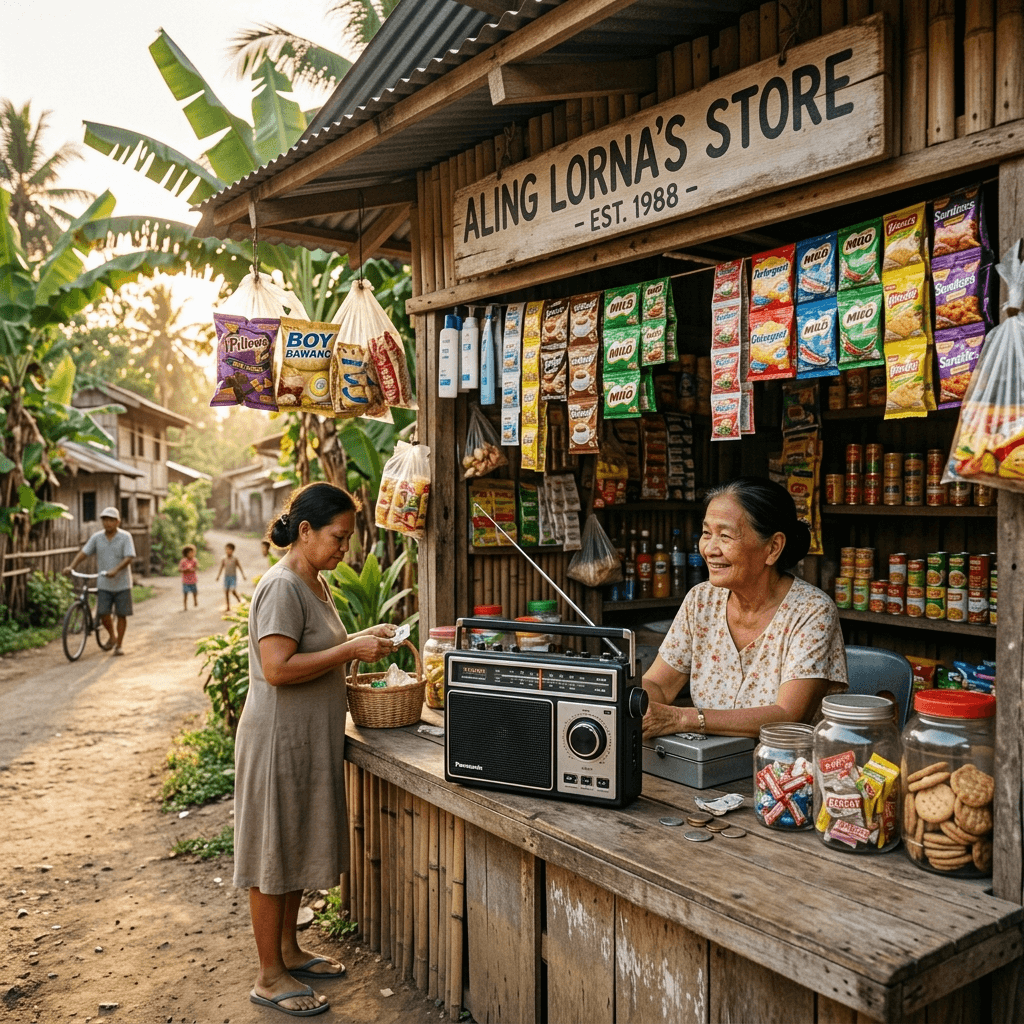
If you were to analyze the global media landscape, you might easily assume that the traditional radio broadcast is a dying medium. In an era dominated by the endless scrolling of TikTok, the algorithmic curation of Facebook, the visual spectacle of YouTube, and high-speed on-demand streaming services like Netflix, it seems logical that the humble, audio-only radio would be relegated to the history books.
However, if you look closely at the media consumption habits in the Philippines, you will find that the reality is quite the opposite. From the heavily congested, bustling streets of Metro Manila to the far-reaching, isolated islands of Batanes and the deep southern provinces of Mindanao, the radio remains an absolute cornerstone of Filipino daily life. It is not just surviving the digital age; in many ways, it is actively thriving. Let us explore the profound cultural, economic, and practical reasons why, in the Philippines, radio still reigns supreme.
The Ultimate “Masa” Medium
To understand the enduring dominance of Philippine radio, you must first understand the concept of the masa (the masses). The vast majority of the Philippine population belongs to the working class. For this massive demographic, media consumption is largely dictated by economics and accessibility.
Cable television requires expensive monthly subscriptions. High-speed internet requires costly data plans. Smartphones require frequent charging and can be prohibitively expensive. Radio, on the other hand, is the ultimate democratic medium. It is completely, unconditionally free. Once you purchase a cheap, battery-operated transistor radio, you have unlimited access to thousands of hours of music, news, and entertainment.
Furthermore, radio does not demand your undivided visual attention. A factory worker cannot watch a YouTube video while operating heavy machinery. A carinderia (local eatery) owner cannot scroll through Facebook while cooking adobo for the lunch rush. A labandera (laundrywoman) cannot hold a smartphone while her hands are submerged in soapy water. Radio provides the perfect, unintrusive background soundtrack to the hard labor of the Filipino working class, keeping them entertained and informed without interrupting their livelihood.
The Commuter’s Constant Companion
Another massive factor in radio’s continued dominance is the unique, often grueling reality of the Philippine commute. Metro Manila is notorious for having some of the worst, most soul-crushing traffic congestion in the entire world. A typical daily commute from Quezon City to Makati can easily take two to three hours each way.
During these agonizing hours spent trapped inside a vehicle, the radio is an absolute necessity. But in the Philippines, radio listening is rarely an isolated experience; it is a highly communal one. When you step into a public utility jeepney, a UV Express van, or a taxi, you do not get to choose the playlist. The driver is the undisputed captain of the ship, and the driver dictates the radio station.
This creates a fascinating shared cultural experience. Millions of commuters are forced to listen to the exact same morning news broadcasts, the exact same political commentary, and the exact same OPM love songs at the exact same time. The booming voice of an AM news anchor or the hilarious banter of an FM DJ becomes the shared soundtrack of the national commute, creating a sense of unity and shared reality among complete strangers stuck in the same traffic jam.
The Original Social Media
Long before Mark Zuckerberg invented Facebook, and long before Twitter hashtags dominated the public discourse, the Philippine radio station was the original, highly interactive social media platform.
Filipinos are inherently highly social people who crave connection, and radio broadcasters understood this decades ago. Philippine radio has always been incredibly interactive. Before the advent of SMS texting, listeners would physically mail letters to the radio station or wait on hold for hours using landline phones just to get a chance to speak to the DJ on the air.
Today, that interactivity has evolved but the core principle remains exactly the same. Programs are driven entirely by listener participation. DJs read a continuous stream of text messages, Facebook comments, and Tweets live on the air. They host live call-in segments for everything from political debates to deeply personal love advice.
The beloved “shoutout” culture is a perfect example of this. Hearing a DJ say, “Hello to the nursing students of UST listening right now,” or “Happy birthday to Mang Jose in Barangay San Antonio,” provides a massive thrill for the listener. It validates their existence and proves that their voice is being heard by a nationwide audience. This level of immediate, intimate, and thrilling interactivity is something that a pre-recorded Spotify playlist simply can never offer.
The Ultimate Emergency Lifeline
Beyond entertainment, radio’s supremacy is cemented by its undeniable role as a critical public service. The Philippines is a nation intimately acquainted with severe natural disasters. Situated in the typhoon belt and the Ring of Fire, the country regularly faces devastating super typhoons, massive earthquakes, and sudden volcanic eruptions.
When a major disaster strikes, the fragile digital infrastructure is almost always the first thing to collapse. Power lines snap, cell towers lose their backup generators, and the internet goes completely dark. In these terrifying, critical moments of isolation, the battery-operated AM radio transforms from an entertainment device into a literal lifeline.
AM signals can travel vast distances and penetrate thick concrete and fierce storms. Stations like DZBB, DZRH, and Radyo Patrol drop all regular programming to provide wall-to-wall, uninterrupted emergency coverage. They coordinate with the Coast Guard, interview local mayors, and broadcast vital instructions on where to find evacuation centers and relief goods. In a country where natural disasters are a matter of “when” not “if,” the radio is not just relevant; it is a vital tool for national survival.
A Language the People Understand
National television news in the Philippines is often delivered in a very formal, stiff, and highly polished version of Tagalog. English is also heavily used in broadsheets and corporate media.
Radio, however, speaks the true, unvarnished language of the streets. Broadcasters use colloquialisms, local slang, and highly expressive tones. They do not just report the news; they react to it with the same anger, humor, and frustration as the common citizen.
Furthermore, regional radio stations broadcast entirely in local dialects like Cebuano, Ilocano, Hiligaynon, and Waray. This linguistic authenticity creates a profound bond of trust between the broadcaster and the listener. The masa trusts the radio announcer because the radio announcer sounds exactly like their neighbor, their uncle, or their friend.
The Digital Pivot: Evolving, Not Disappearing
Perhaps the most impressive reason radio has survived is that the industry absolutely refused to be left behind by the digital revolution. Instead of fighting the internet, Philippine radio networks aggressively embraced it.
They pioneered the “Teleradyo” (television radio) format, streaming high-definition video of the radio booths directly to Facebook Live and YouTube, allowing listeners to watch the DJs in action. They invested heavily in digital infrastructure, ensuring their audio streams were available globally in crystal-clear quality.
This digital pivot gave rise to platforms like Pure Pinoy Radio. We exist to bridge the gap between the rich, analog history of Philippine broadcasting and the limitless convenience of the digital age. By aggregating these live streams into a single, globally accessible digital directory, we ensure that the power of Philippine radio can reach an Overseas Filipino Worker in Dubai just as easily as it reaches a taxi driver in Manila.
Conclusion: The Enduring Heartbeat
As we move further and further into the digital age, new technologies and new social media platforms will inevitably continue to emerge. But the radio will not disappear. It has proven its resilience time and time again.
It survives because it is adaptable, it is free, and most importantly, it is deeply human. It is the trusted companion in the dark, the voice of reason during a storm, and the shared soundtrack of a nation. Radio is, and will always be, the enduring heartbeat of the Philippines.